Ages 6–14 · Classroom & Online

Build a Stronger Brain.
Shape a Brighter Future.

A structured 8-level abacus program that trains how your child's mind handles numbers — sharper focus, faster mental math, and the quiet confidence that comes from solving problems alone. Available in our classrooms and online, anywhere in the world.

8 Levels · Structured Path
Children learning abacus in a Chanakya classroom
Ages 6–14
If This Sounds Familiar

You watch your child struggle with numbers — and nothing you've tried has stuck.

Apps. Worksheets. Extra tuition. The result is the same: short bursts of practice that fade, and a child who quietly starts to believe they are "just not a math person."

  • Math homework takes longer than it should — and ends in frustration, not understanding.
  • Focus drifts after a few minutes of any single task.
  • Calculators have replaced thinking. Even simple sums feel like a chore.
  • Worksheets and apps test memory for a week. Then it's gone.
  • Your child has started saying the thing every parent dreads: "I'm bad at math."
"I'm bad at math" is not a fact.
It's a habit — and habits can be rebuilt.

The abacus works because it doesn't teach shortcuts. It rebuilds the underlying habit of how a child looks at a number, holds it, and arrives at the answer. That foundation carries into every subject — not just math.

The Chanakya Method

A 30-year-old method, not a trend. A rebuilt foundation, not a shortcut.

The Chanakya Abacus program trains the brain the way an athlete trains the body — through repetition, progression, and increasing challenge across a clearly defined path. Children work with a physical abacus first, then learn to visualize the same movements mentally. Both hemispheres engage. Concentration deepens. Calculation speed builds — visibly, level by level.

There are no tricks to memorize and no apps to outgrow. There is a structured 8-level curriculum, taught the same way in every classroom and online session, by teachers trained in the Chanakya method.

Physical Practice
Mental Visualization
Step-by-Step Progression
Whole-Brain Engagement
Chanakya abacus with number representation
The 8-Level Path

Not an open-ended commitment. A clear journey, level by level.

Every child starts at Level 1 and progresses through a defined curriculum. Parents always know what their child is working on, what the next milestone is, and how far they've come.

1

Foundations

Numbers, beads, basic combinations

2

Addition

Single & multi-digit sums

3

Subtraction

Bead mechanics, mental steps

4

Multiplication

Tables visualized, not memorized

5

Division

Reverse multiplication, done mentally

6

Decimals

Two and three-digit fluency

7

Speed

Mental calculation under pressure

8

Mastery

Visualization without the tool

What Your Child Actually Gains

Four measurable outcomes, not vague promises.

Visualization

Children learn to see the abacus in their mind, and to "move" beads there. The tool becomes optional — the skill stays.

Calculation Speed

5 × 8 = 40 — answered in a heartbeat, entirely in the head. Multiplication, division, decimals — solved without reaching for a calculator.

Concentration

The discipline of structured abacus practice trains sustained focus. Children who finish an abacus level find schoolwork easier to sit with.

Whole-Brain Development

The left brain does the logic. The right brain does the imagery. Abacus engages both — together, every session.

How Your Child Attends

Same method. Two formats. Pick what fits your family.

Classroom Learning

At any of our franchisee locations. Small groups, a real teacher, real classmates. The abacus in hand, the lesson in person — and a community of children working through the same levels.

Online Class

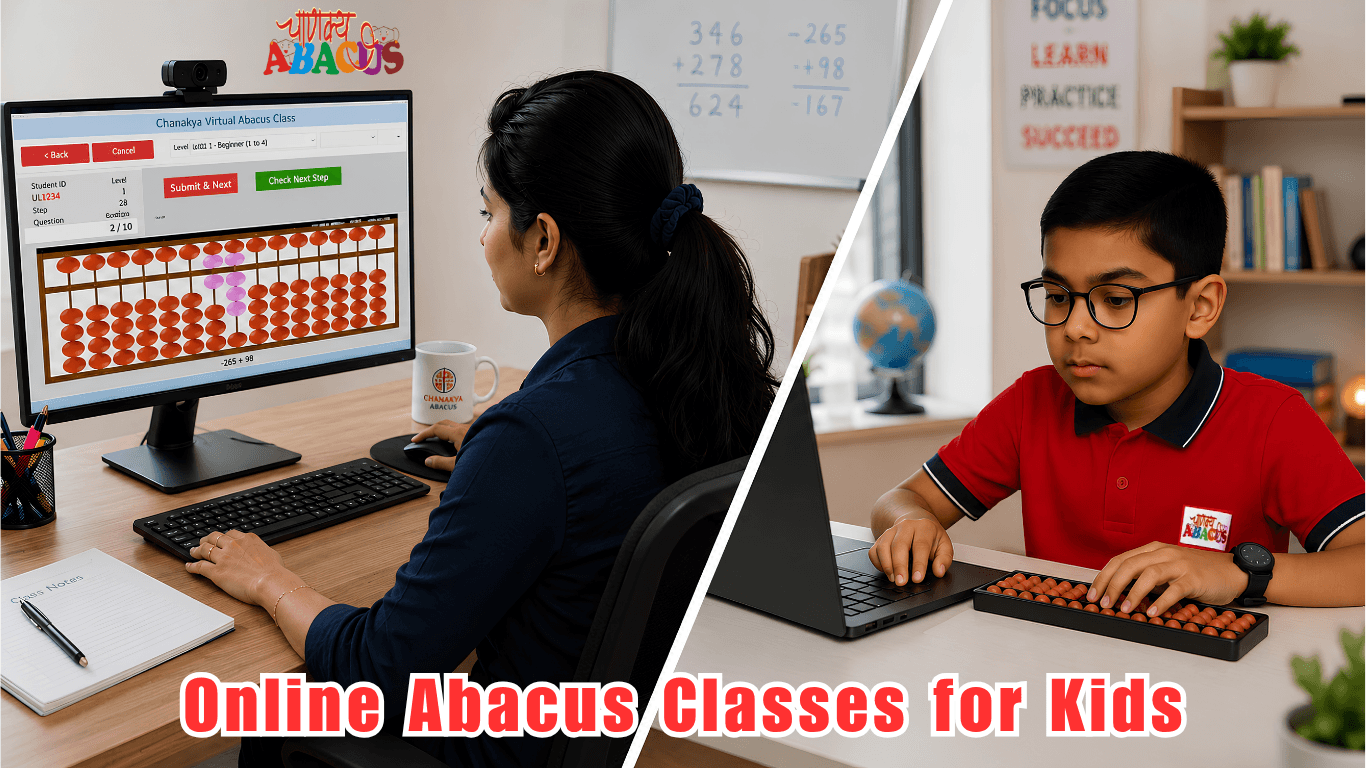
Live, teacher-led sessions streamed to your home. Same 8-level curriculum, same progression, the same outcome — for families who can't reach a classroom or prefer learning from home.

Why Parents Choose Chanakya

An established program, not a passing trend.

A defined 8-level curriculum. An existing franchisee network already running physical classrooms. A proven online format for families anywhere.

[Add: years]
Years Running
[Add: cities]
Cities with Classrooms
[Add: students]
Students Trained
8
Structured Levels
Action needed: Replace the bracketed numbers above with your real figures (years running, franchisee cities, students trained). These are the strongest trust-builders on the page — do not ship with placeholders.
★★★★★

"My daughter used to count on her fingers for anything past 10. After two levels, she's doing three-digit sums in her head. The change isn't just in math — she sits with homework longer now."

— [Add: parent's name], [Add: city]
Action needed: Drop in a real parent testimonial above, or remove this card.
Honest Answers

The questions every parent asks before they enroll.

Is the online class really as effective as classroom learning?

Yes — the curriculum, the teacher training, and the level progression are identical. Online students use a virtual abacus that mirrors the physical one, so the visualization skill transfers directly. Many families who start online later add in-person classes; many who start in classrooms continue online when they move or travel. Both formats lead to the same Level 8 outcome.

What age should my child start, and is 6–14 a hard rule?

6–14 is the range where the method produces the strongest, fastest results — the brain is most receptive to building mental-visual habits at that age. Children who start closer to 6 typically progress smoothly. We have placed children outside the range on a case-by-case basis; the trial class is the right place to find out if your child is a fit.

How long does it take to see results, and what does progressing through the 8 levels look like?

Most children show visible changes in focus and calculation confidence within the first 8–12 weeks. Each level typically takes 2–4 months of regular attendance. The full 8-level path usually takes 2.5–3.5 years, but the gains show up long before the final level — at Level 3, most children are doing two- and three-digit sums mentally. Levels 6–8 are where real speed and visualization mastery land.

What's the cost, and is there a trial before committing?

Yes — we offer a free trial class before any commitment. Bring your child in (or join an online session), watch a real lesson, and see the method in action. We'll talk you through which level fits and what the program looks like from there. Pricing is discussed at the trial, so you have the full picture — not just a number — before any decision.

How do I find or choose a franchisee near me?

The trial-class inquiry form collects your city and pin code. We'll connect you with the closest franchisee — and if there's no classroom in your area, the online format is built exactly for families in your situation.

Your Next Step

One trial class tells you more than any brochure.

Bring your child in for a free session. Watch a real lesson. See how the method lands for your family. No commitment, no pressure — just an honest look at what's possible.